
Dietlind Wolf: The Art of Seeing
I've admired Dietlind Wolf's work for many years - at least a decade. Long before ceramics became central to her practice, I knew her through her magazine work - her styling - gorgeous still life and food photography that felt poetic and artistic. There has always been something unmistakably hers about the way she arranges objects. Nothing feels forced or decorative; every photograph, composition, and collection of materials seems to have fallen into place almost magically.
But we all know that nothing about styling and art is “just” magic.
It’s talent, a trained eye, color mastery, composition reworks - over and over again… Patience, and oh… The edit. THE EDIT at the end. The whipped cream with the cherry on top.
What I understand more clearly after knowing Dietlind personally, and after studied under her as a student, Dietlind’s work didn’t come from styling alone. It is the result of time and patience. Practice. Repetition. Her depth of attention behind everything she does, her research, and from years of observing how objects relate to one another and how materials carry memory, history, and meaning. Her photography, styling, creative direction, ceramics, textiles, and now her beautiful book, Naturalia et artificialia, may look like different branches of a long career, but they’re really connected expressions of the same creative instinct.
In my observation of Dietlind over the years, she’s not interested in choosing one medium and allowing it to define her. That is why she doesn’t call herself, “Stylist, Art Director, Ceramicist, Designer, Photographer”, or the myriads of other titles that could fit her. She chooses to be known as an Artist. A creative visionary. And that is exactly how I see her as well - because really, she does it all but artistry is the heart of her work.
Dietlind follows the subject, the material, or the question in her mind until she understands what form the work needs to take before she gets started on making, or telling, her tale. Sometimes that form is a photograph, other times it’s clay, fabric, a editorial spread, or a book, but the investigation beneath it remains consistent.
I recognize that way of working because my own creative life has never felt like one career. I never felt, in the beginning, like a blogger or journalist. And later, I didn’t feel like an influencer, content creator, journalist, photographer, interior designer, online educator, or moderator/speaker. And today, I don’t feel like only all of those things plus an exhibition and product designer, best-selling author, and so much more. My “career” has always felt like one long conversation about interiors and creativity that keeps finding new ways to continue, in all shapes and sizes and forms. And I’m happy with that. I also battle, like Dietlind once did, with finding a word - a title - for myself. Truth be told, I still do because really… What’s the first question you are asked when someone meets you, after they know your name and where you’re from. They ask what you do for a living.
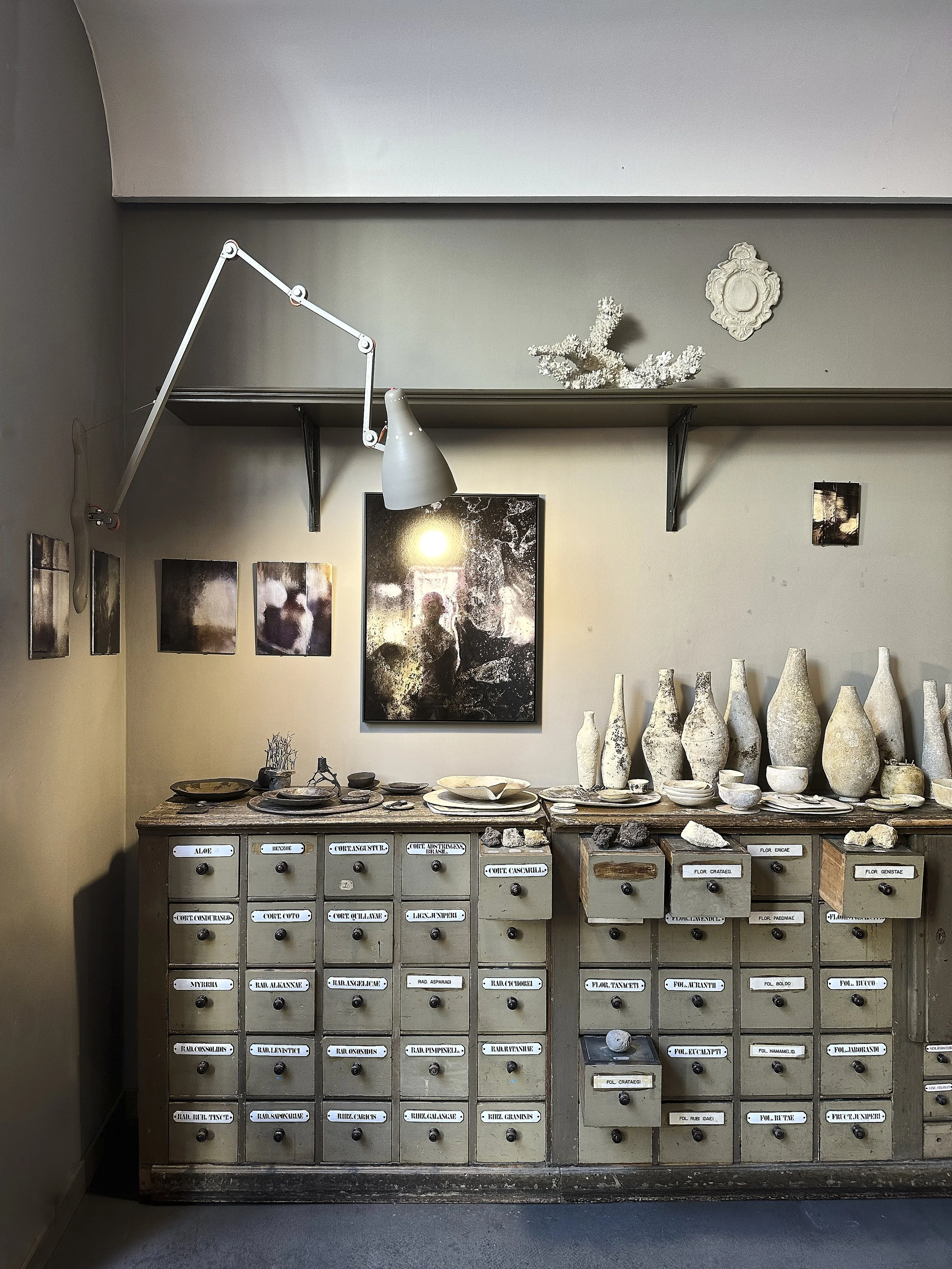
Dietlind grew up in Aachen, Germany - a city where history is not difficult to find. The cathedral, Charlemagne, Roman remains, archaeological excavations, and the old streets of the city gave her an early familiarity with the idea that the present is always resting upon many layers of the past. Hamburg, where she relocated later on, opened the door to the world of magazines, where she learned how to build visual stories across a series of pages and how to translate the sensory experience of food, objects, and atmosphere into two dimensions. When she moved to the coastal port city of Lübeck nearly a decade ago, history entered her work in an even more immediate way since she moved into a home dating from 1230 and became, through her husband Marcus, closely involved with the old Löwen-Apotheke, which has been connected to his family for four generations. Through the pharmacy and the city itself, she began looking more closely at the people who had lived and worked in those buildings before her, at the knowledge they carried, and at the materials they used. The locations may have changed, but there is a natural continuity between the child growing up among the history of Aachen, the stylist learning to communicate visually in Hamburg, and the artist in Lübeck working with objects and materials that connect the present to centuries of human activity.
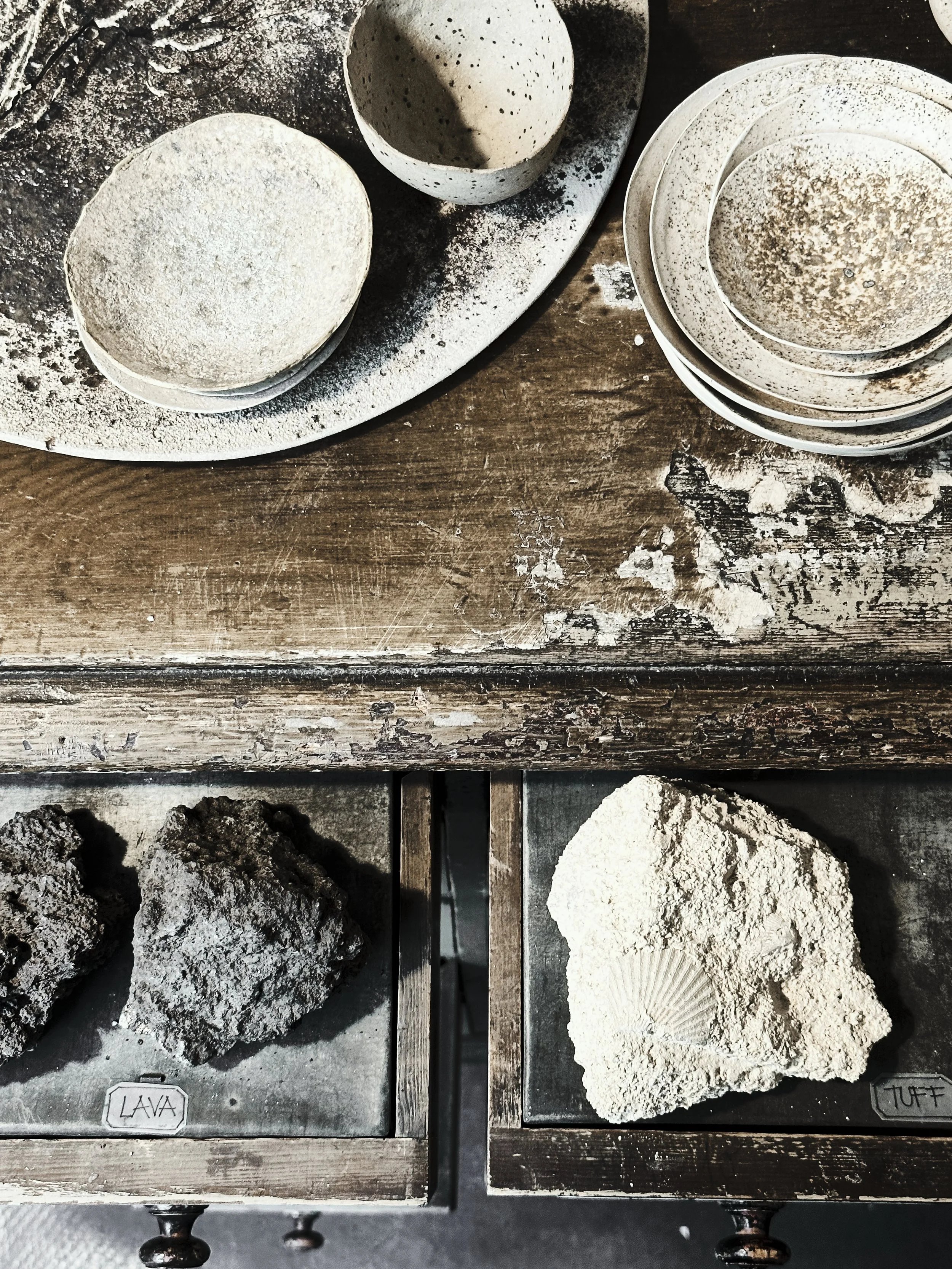
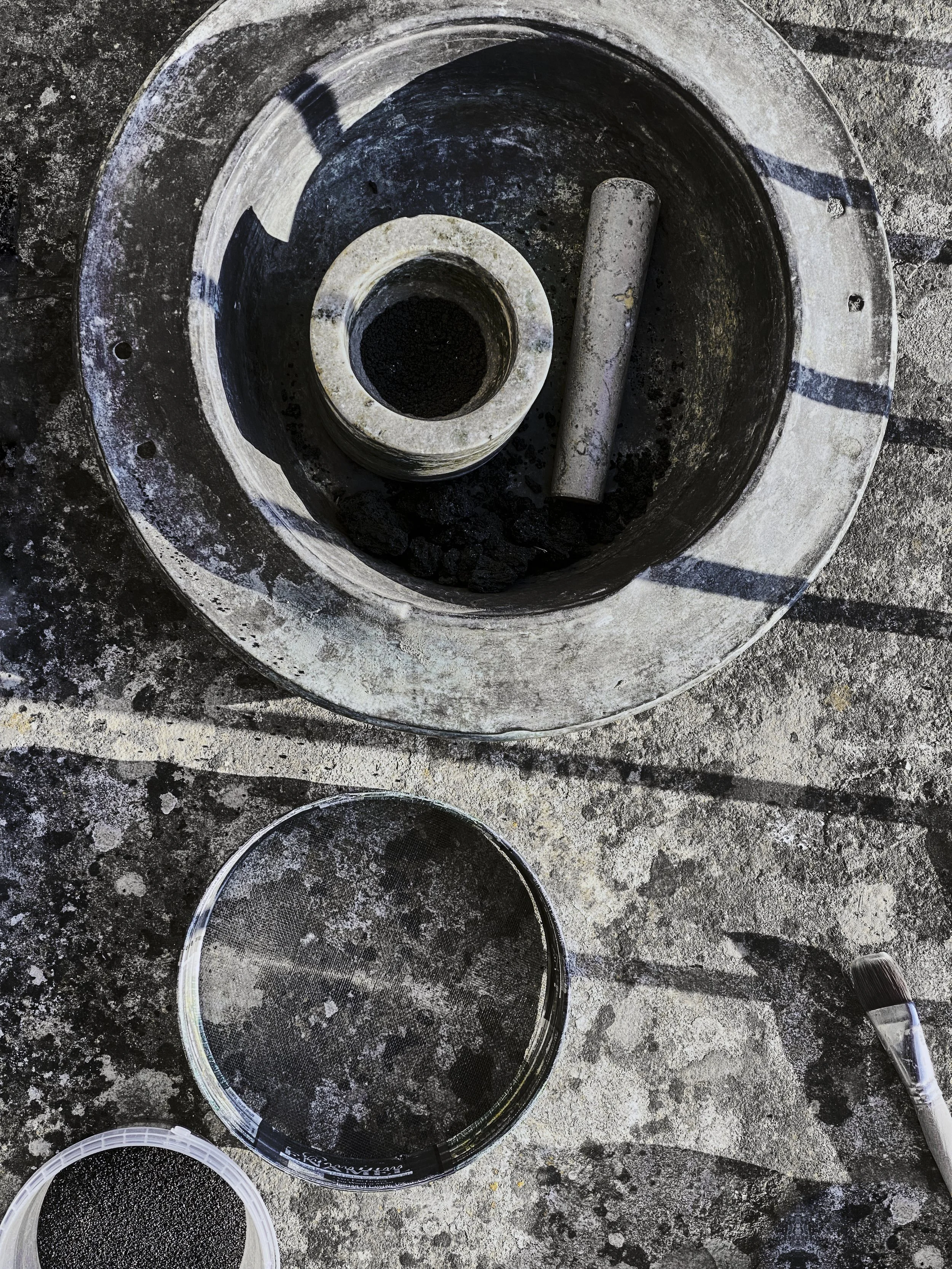
One of the most compelling examples of this connection appears in her ceramic work. Dietlind has worked with archaeological clay and brick fragments from Lübeck, grinding and preparing these materials so they can become part of new pieces. I love the idea that something buried beneath a city for centuries can return in another form, not as an imitation of the past and not as a precious relic that must never be touched, but as part of a living creative process. It feels especially meaningful that some of the methods used to prepare these materials have historical connections to the pharmacy itself. The past is not simply referenced in her work; it is physically present within it.
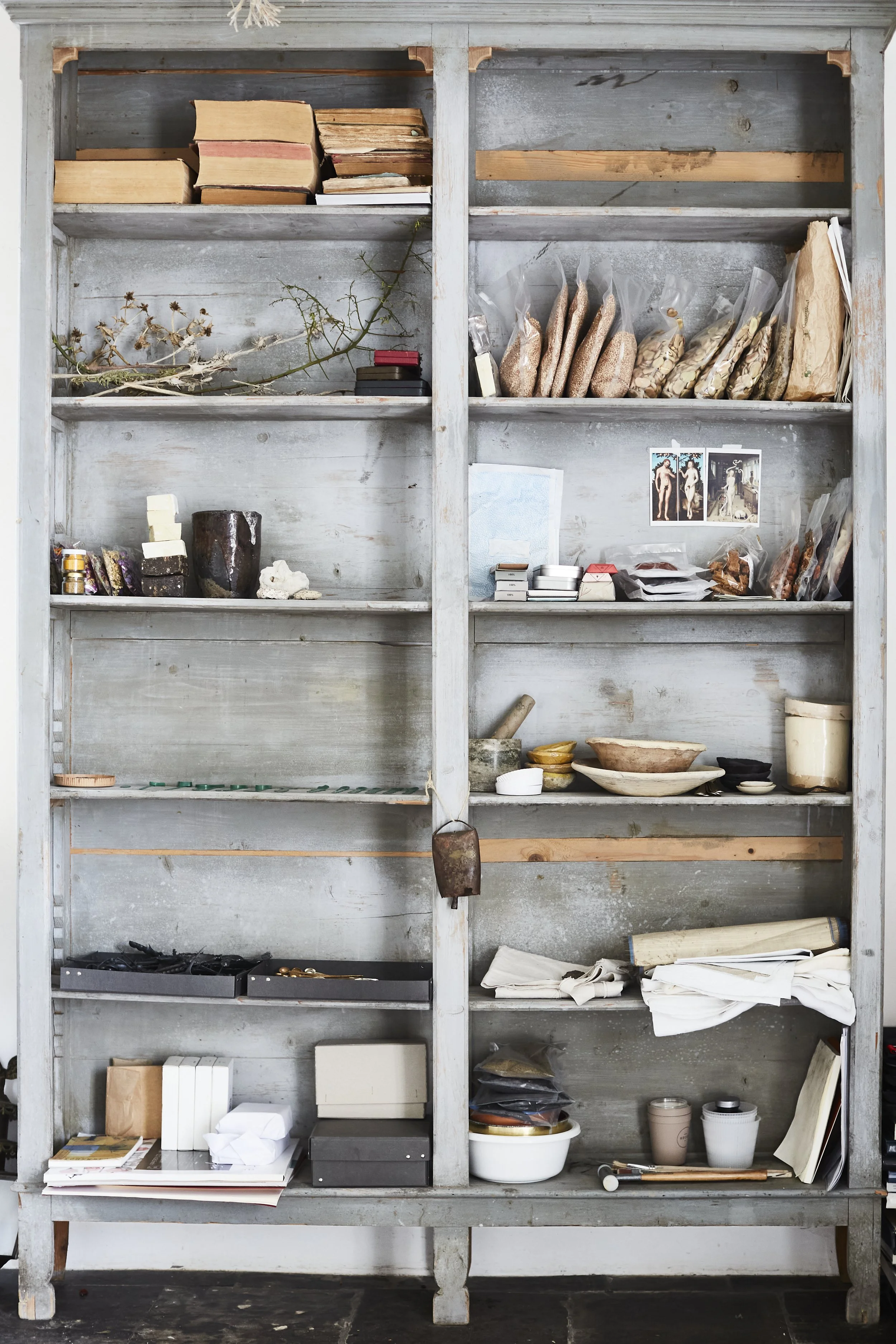
Her process is not linear, and she doesn’t describe creativity as something that begins with a perfectly formed image or a clear plan. Neither do I. I view creativity as being like water - fluid - it finds place in the empty places, the openings, the crevices. A project may begin with a material, a color, an object, a feeling, a botanical discovery, a historical reference, or a practical question, and from there the individual elements begin to gather. Dietlind thinks of the process as a kind of woven structure in which many strands slowly find their relationship to one another. I found that description reassuring because so much creative work begins in exactly this uncertain place. We often imagine that artists see the finished result before they start, when in reality they may be collecting fragments for months or years without knowing precisely how they’ll fit together. She allows that uncertainty to remain and doesn’t rush to close the gap between the first idea and the finished work, nor does she force every project through the same method. Instead, she creates enough structure to hold the work together while leaving room for discovery. Her comparison of a creative concept to a rubber band is particularly apt: it establishes a boundary, but it can stretch, move, and respond as the work develops.
This is where curiosity becomes more important than medium. Dietlind may be known as a photographer, stylist, ceramic artist, and author, but those titles describe what she produces rather than what truly drives her. At the center of her work is the desire to investigate, to gather, to compare, and to understand. The different disciplines simply give that curiosity somewhere to go.
That becomes especially clear when she speaks about imperfection. In a world where so much creative work is polished, corrected, filtered, and refined until every trace of the maker has disappeared, not to mention all of the AI slop out there, Dietlind embraces exactly the opposite. She welcomes the unexpected marks left by fire, the subtle shifts that happen during the making process, and the small irregularities that remind us a piece has been touched by human hands.
Nature is never symmetrical, and neither are we. Why should the things we make aspire to a perfection that doesn't exist anywhere outside a machine?
I found myself thinking about our homes as I listened to her reflections as we chatted for this very piece you’re reading now. Perhaps that's why we respond so deeply to handmade objects. Why most of us love nature. A slightly uneven rim on a bowl, the softened edge of an old wooden table, a fallen ginkgo leaf, linen that wrinkles after years of use, a shiny chestnut on the ground, a vintage chair whose paint has worn away where generations of hands have rested - these are the details that make us feel connected. They remind us that beauty isn't something frozen in time. It's something that continues to evolve through use, age, repair, and care. The most memorable interiors I've photographed over the years have never been perfect. They've felt lived in, layered, and deeply personal because the people who lived there allowed those traces of life to remain.
That philosophy runs through Dietlind's newest artist's book, Naturalia et artificialia. Even the title feels like an invitation to slow down. Borrowed from the historic cabinets of curiosity, where natural specimens and handmade objects were displayed side by side, it captures a way of looking at the world that refuses to separate nature from culture or observation from making. The book isn't simply about ceramics or photography, nor is it intended as a catalogue of finished work. It documents an ongoing conversation between materials, landscape, memory, and two artists who chose to let a place shape their thinking rather than arrive with fixed conclusions.
That place was Sicily.
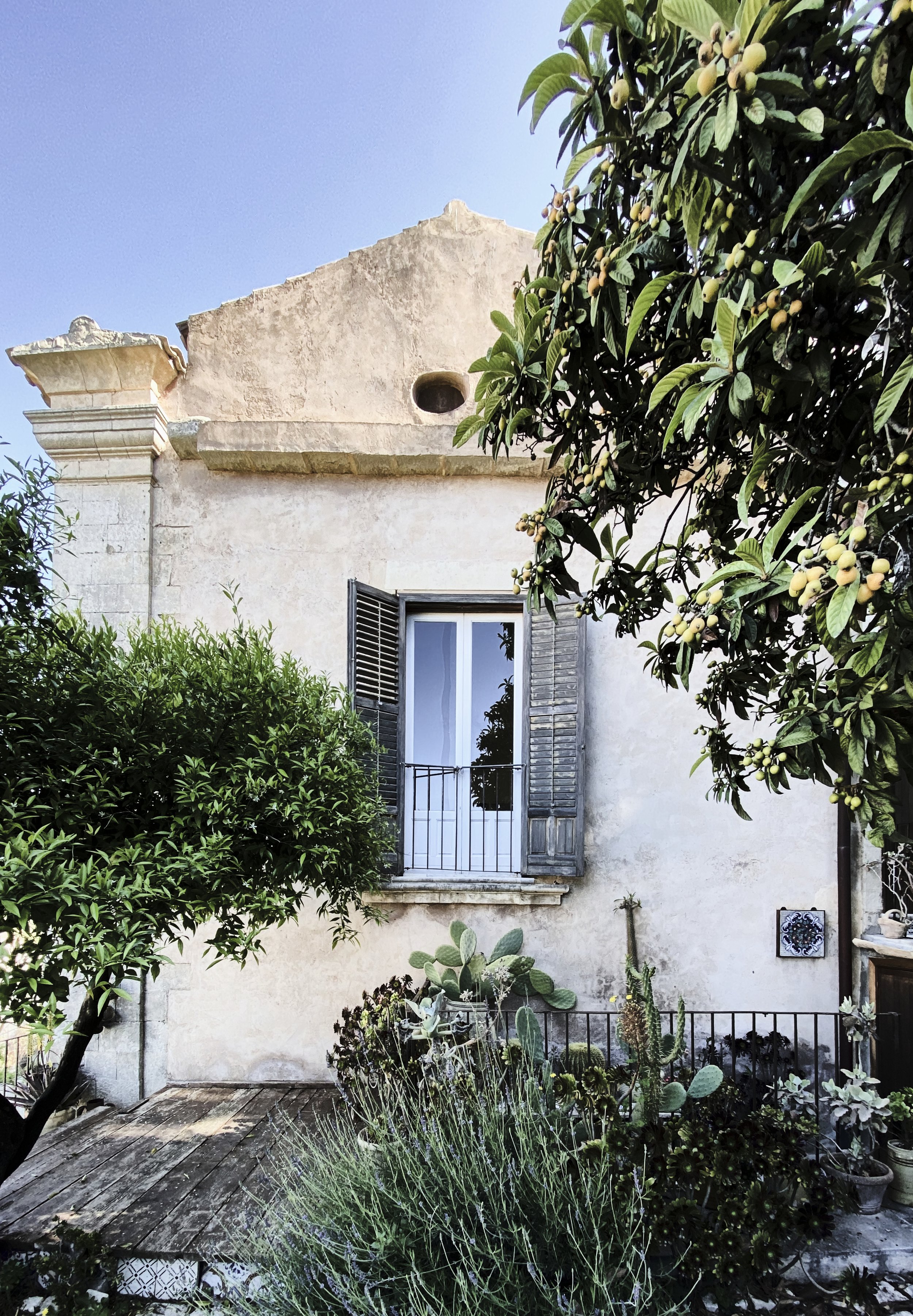
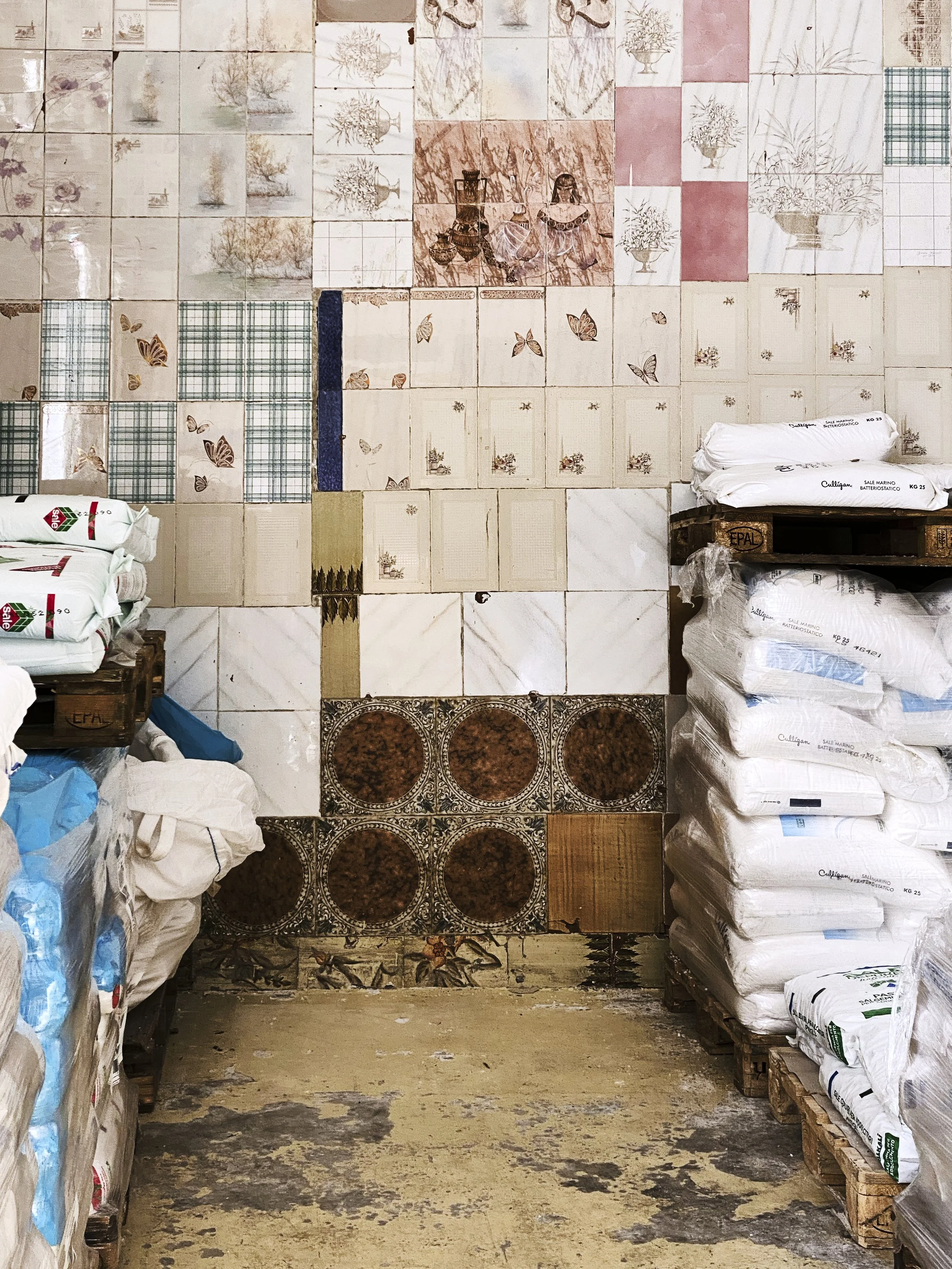
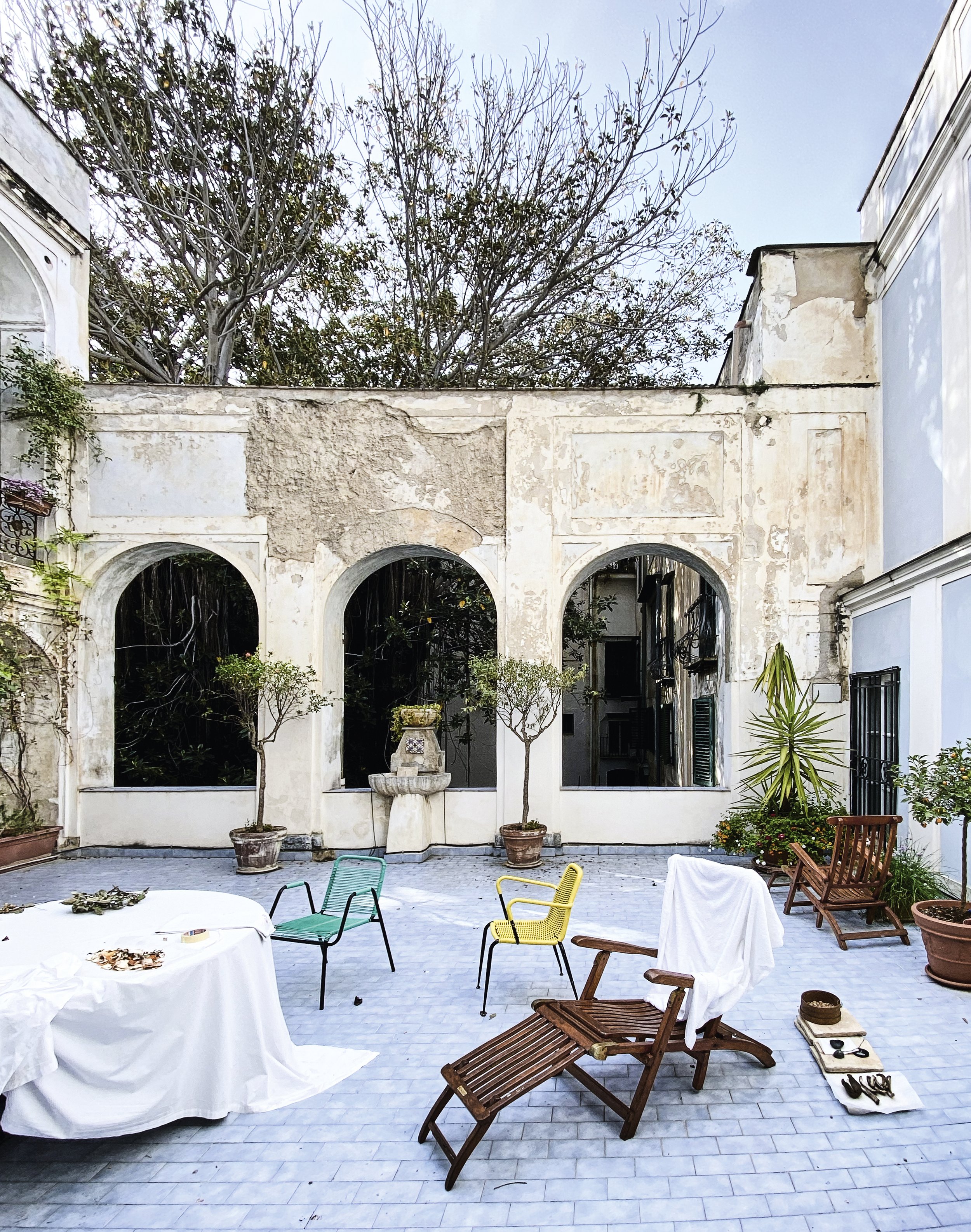
Originally, Dietlind and fellow artist Gabi Veit imagined taking their collaboration somewhere entirely different, but Sicily became the destination that made the most sense. It offered exactly what they were searching for: a landscape layered with history, shaped by countless cultures, rich in geology, archaeology, architecture, food, and tradition. Yet what interested me most wasn't why they chose Sicily. It was how they allowed Sicily to change the work itself. You see, both artists arrived with their own ideas and areas of investigation, but neither tried to impose those ideas onto the landscape. Instead, they walked, observed, collected, photographed, talked, and remained open to whatever kept revealing itself. That willingness to be surprised feels increasingly rare. We often travel with a checklist of images we hope to make or experiences we expect to have. Dietlind seems to travel differently. She pays attention first and decides what it all means later. In fact, it wasn't until she returned home and began editing her photographs that she fully understood what Sicily had given her. Looking carefully through the images, recurring themes began to emerge - connections that hadn't been obvious while she was standing in the middle of them.
I smiled when she said that because many of us have experienced something similar. We don't always recognize the significance of a place while we're living (or traveling) inside it. Sometimes understanding requires distance or the story only becomes visible when we have the chance to look back. For me, this occurs most of the time.
The learning comes later.
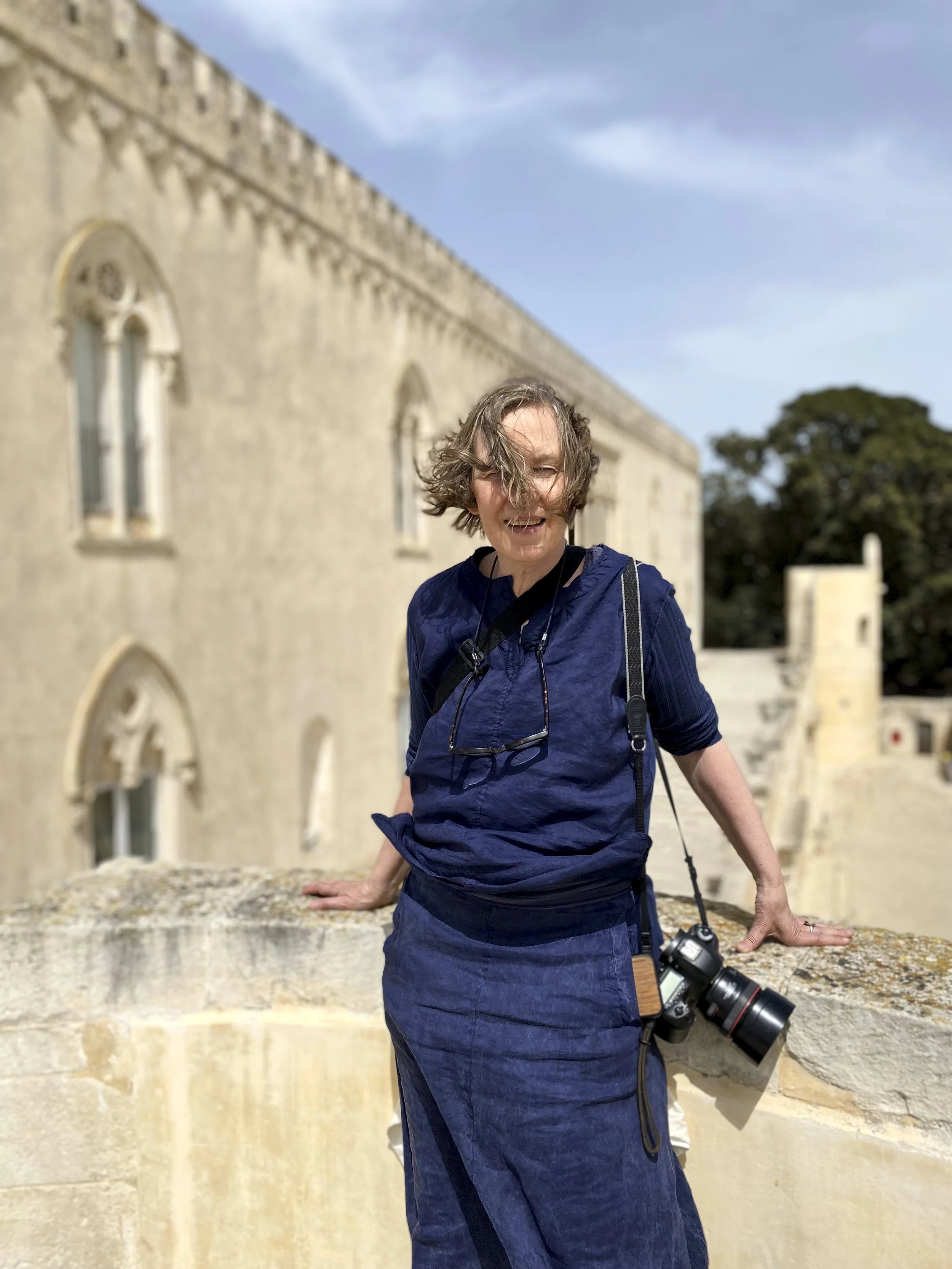
Dietlind Wolf
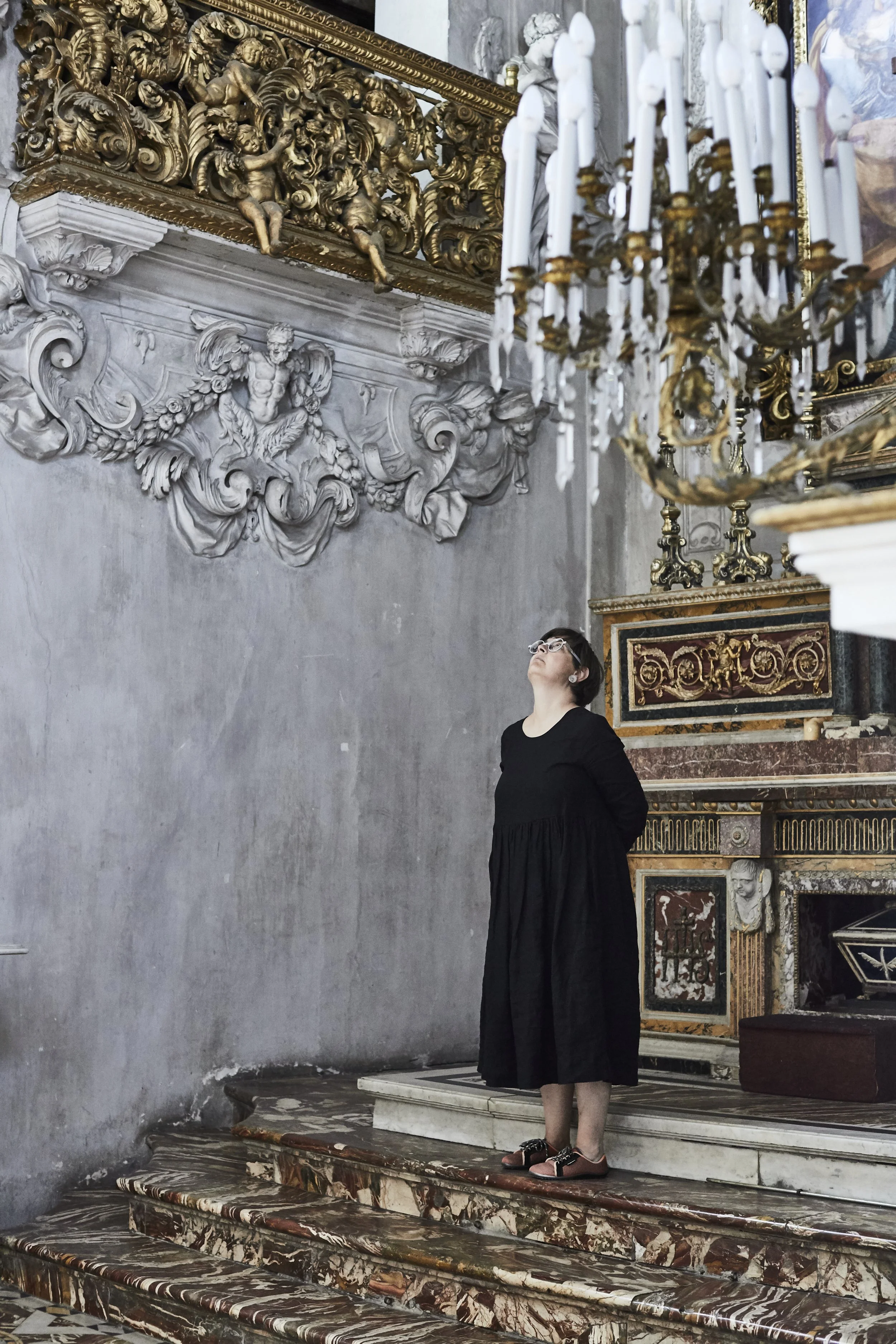
Gabi Veit
Creativity doesn't always reward certainty. More often, it rewards attention. It asks us to notice before we judge, to observe before we explain, and to trust that not every discovery needs to make immediate sense.
The longer I sat with Dietlind’s reflections, the less I thought about photography, ceramics, or artist's books as individual accomplishments. Instead, I found myself thinking about what it means to build a life around looking closely enough that the ordinary slowly becomes extraordinary.
Perhaps that's what I've admired in her work all along. Not simply her eye for composition or her remarkable sensitivity to materials, but her unwavering belief that the world is always offering us something worth noticing if we're willing to slow down long enough to see it.
One answer during my conversation with Dietlind, however, stayed with me longer than any of the others.
When I asked her which medium feels closest to her heart today, I expected ceramics to take center stage. After all, that's the work many people know her for, after her styling. Instead, she answered in a way that immediately made everything else fall into place. The different mediums, she explained, satisfy different needs, but what lies at the center of her practice is the investigation itself. Ceramics happen to answer certain questions. Photography answers others. Textiles become another way of exploring an idea.
The medium is never the starting point. It's simply the most appropriate language for what she is trying to understand.
I couldn't stop thinking about that because it turns so much conventional creative advice upside down. We're constantly encouraged to find our medium, our signature style, our niche, the thing that makes us recognizable. As I mentioned earlier, we often spend years trying to answer the question, "What do I do?" when perhaps the more interesting question has always been, "What am I curious enough to spend years exploring?"
The answer to that question may never fit neatly inside a single discipline, and perhaps it shouldn't. It's one of the reasons I find multidisciplinary creatives (like my own career) so inspiring. They remind us that creativity isn't linear, nor is it something that arrives fully formed at the beginning of a career. It expands. It absorbs new influences. It asks better questions as we grow older. Looking back, what appears to be a series of changes is often simply the natural evolution of a mind that refuses to stop learning.
As I picked up her beautiful book, authored alongside Gabi Veit, Naturalia et artificialia, I found myself slowing down without really intending to. It's not a book that asks to be consumed quickly. Like the work it documents, it invites lingering. You notice the paper beneath your fingertips, the generous white space, the rhythm created by photographs, drawings, handwritten notes, botanical studies, ceramic forms, and quiet moments that might easily be overlooked if you hurried through. Even some of the paper itself changes - texture - some pages glossy, others matte. It feels less like reading a book and more like spending an afternoon wandering through someone's studio, where every shelf, table, and wall reveals another layer of thought. That sensitivity extends to every production decision. Different paper stocks were chosen to suit different bodies of work, allowing photographs, journals, and tactile pieces to retain their own character rather than forcing everything into the same visual language. It's a small detail, perhaps, but one that perfectly reflects the care running through the entire project. Nothing has been standardized for convenience. Every decision serves the work itself.
By the time I finished our conversation, I realized what happens when someone spends decades refusing to rush their curiosity, refusing to separate thinking from making, refusing to believe that creativity has to fit inside a single title or discipline. There is something deeply reassuring about that approach, especially now, when so much of modern creative life feels driven by speed, algorithms, productivity, and constant visibility. Dietlind's work offers a gentle reminder that another way is possible. One that values observation over performance, patience over urgency, and depth over novelty.
Perhaps that's why her work has stayed with me for so many years. She has remained faithful to something rare: the lifelong practice of paying attention. And in the end, I suspect that's what every creative person is really trying to learn - not how to make more, but how to see more clearly.
As I was writing this essay, I found myself returning to something Dietlind said almost in passing. She hopes that readers of Naturalia et artificialia experience the intensity of Sicily, the richness of its landscape, the traces left by the civilizations that have shaped it over thousands of years, and perhaps even feel inspired to make their own journey. It's a beautiful hope because it reaches far beyond the book itself. She isn't asking us to admire the work. She's inviting us to become more attentive to our own surroundings.
I think that's one of the quiet powers of artists like Dietlind. They don't tell us what to see. They teach us how to see.
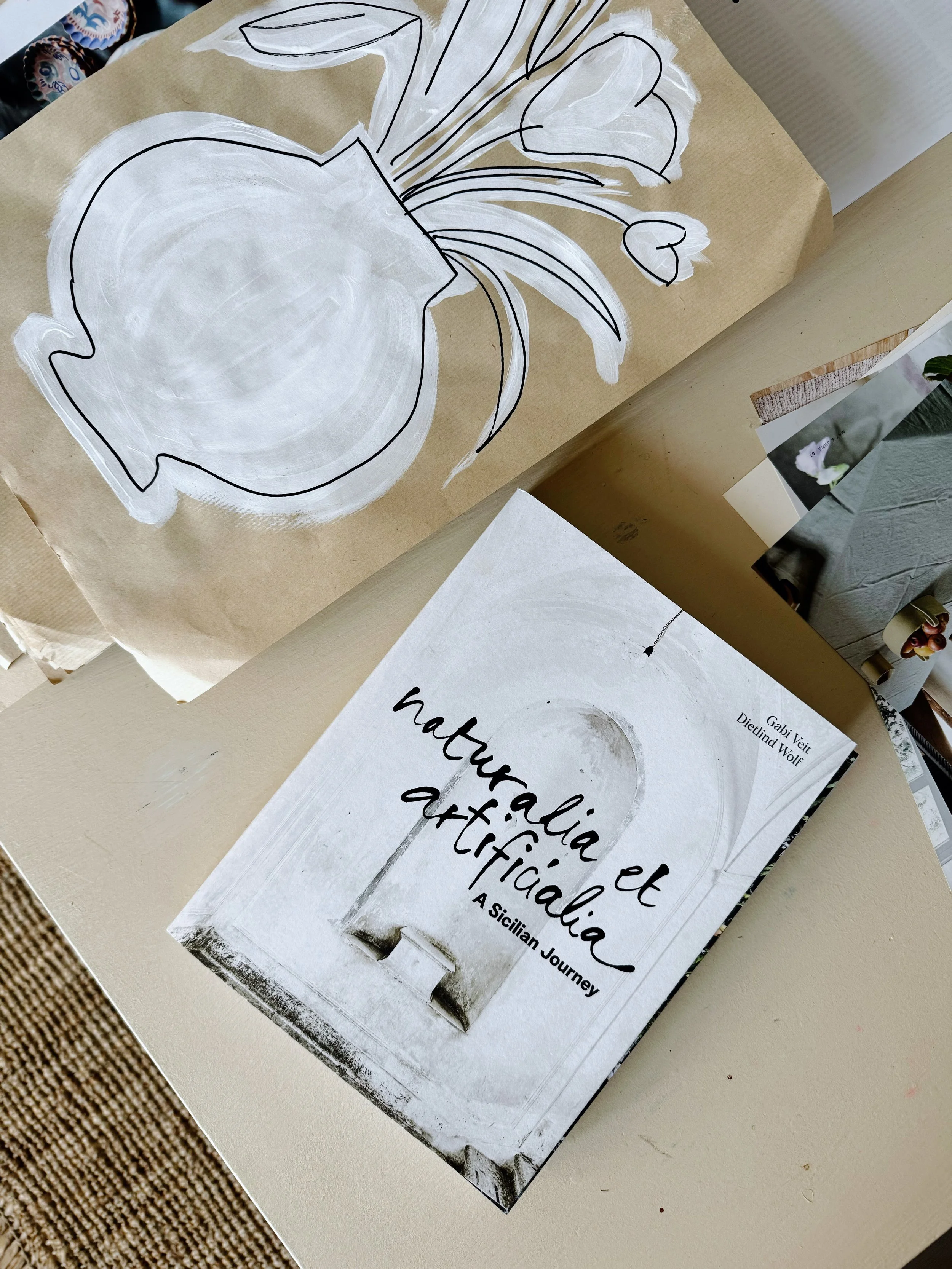
After spending time with her book, I found myself doing something I used to spend a lot of time on before my life became so busy - I studied my surroundings more. Her book dialed me back into my former self, the Holly from last Autumn, who appreciated and saw beauty in the ordinary things around me. A dried seed head on a morning walk, a faded brick wall, a delicate feather, linen with its crinkles, the worn edge of a wooden table. None of these things are extraordinary on their own, yet in the hands of someone who has trained herself to notice, they become the beginning of an entirely new conversation. And in Autumn 2025, I felt very connected and alive - but 2026 came with a lot of worries and stresses that threatened to overtake me. Fortunately, I just made it through the worst of times… And now having her book before me, I’m feeling a newness in my own perspective once again.
I have to admit, I've admired her work for so long but didn’t fully understand why. I was responding to the photographs, of course, but underneath the compositions was something much quieter and much more enduring: a profound respect for observation. For detail. The artistic bits, the sensory tie-in, the focus on little things that people nearly always overlook. There is no urgency in her work, no need to impress, no chasing of trends or algorithms or whatever happens to be capturing our attention this week. Instead, there is the confidence that if you continue looking closely enough, the work will eventually reveal itself and in that, you find something new about yourself, too. And that’s beautiful.
I honestly find that deeply encouraging.
For those of us who make things for a living, it's easy to believe that every idea has to become something immediately useful, or never seen before… that every creative pursuit should lead to a product, a collection, an exhibition, or a book. Yet Dietlind's practice reminds me that making is only one part of a creative life. Looking matters just as much. Reading matters. Walking matters. Collecting matters. Sitting with unanswered questions matters. Some of the most important work we ever do leaves no visible trace for months, sometimes years, because it is quietly changing the way we understand the world before it ever asks us to create something from it.
Perhaps that's why this interview stayed with me far longer than I expected it to - and why it took me a few months to publish this piece today. I began thinking I was writing about an artist whose work I have admired for years. I finished feeling as though I'd been reminded of something I needed to hear myself.
Creativity isn't a race toward mastery, nor is it a search for the perfect medium or the perfect style. It's a lifelong practice of remaining curious, allowing yourself to be changed by what you discover, and trusting that every experience, every place, every conversation, every object picked up from the ground, every museum visited, every flower pressed between the pages of a notebook, and every unexpected detour will eventually find its place.
Looking back over Dietlind Wolf's remarkable body of work, that feels like the real story.
Not the photographs, the styling, the ceramics, or even her new beautiful book.
The story is the life behind them all - a life spent paying attention, following curiosity without apology, and proving, quietly and consistently, that the richest creative journeys are rarely the ones we plan. They're the ones we're willing to follow.
Please pick up Dietlind and Gabi’s book here.
Photography: Final image: Holly Becker. All others: With permission from Dietlind Wolf and Gabi Veit.